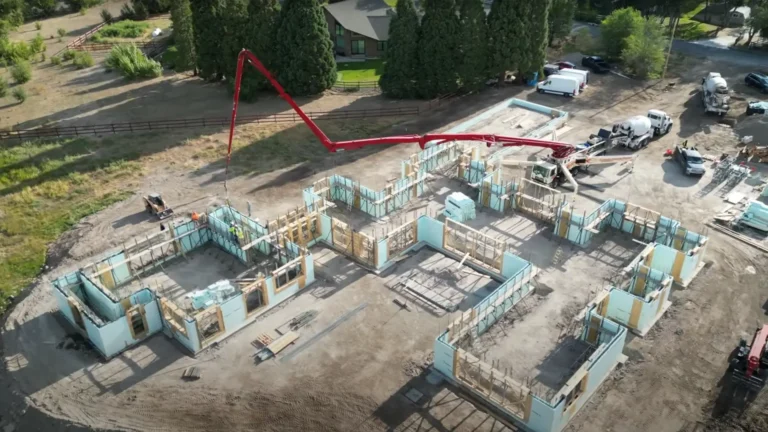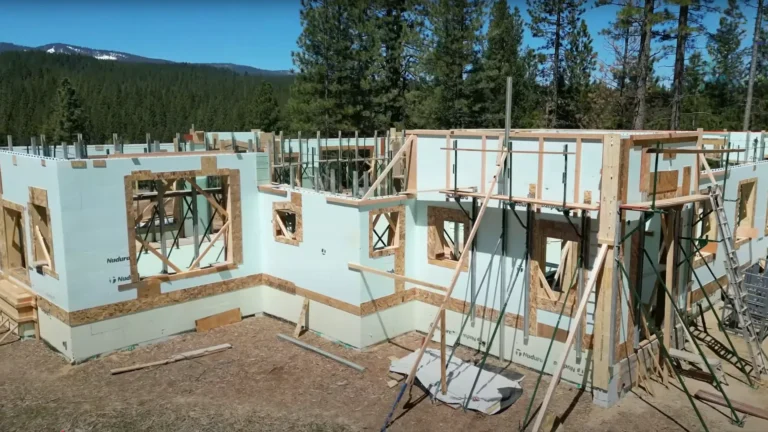
Insulated Concrete Form construction addresses every major challenge California homeowners face: wildfires, earthquakes, extreme heat, and rising energy costs.
Wildfire Protection
California’s wildfire seasons are becoming longer and more intense. ICF construction provides a 4-hour fire rating compared to just 45 minutes for traditional wood framing. The concrete and steel construction is non-combustible and resists ember intrusion, one of the primary ways wildfires spread to homes. For communities like Cameron Park, El Dorado Hills, Auburn, and other foothill areas, ICF provides critical fire protection.
Earthquake Resilience
As a state on major fault lines, California requires superior seismic construction. ICF walls function as Special Reinforced Concrete Shear Walls, meeting IBC seismic codes and earning ASTM E2126 certification. The monolithic concrete structure provides far greater lateral force resistance than traditional wood-frame connections.
Energy Efficiency in Extreme Heat
Sacramento summers regularly exceed 100°F, driving up cooling costs. ICF’s continuous insulation eliminates thermal bridging found in traditional framing, reducing heating and cooling costs by 25-50%. The thermal mass of concrete helps maintain consistent indoor temperatures even during extreme temperature swings.
Disaster Resilience
Beyond fire and earthquakes, ICF structures withstand winds up to 250 mph, making them virtually hurricane-proof. They’re also resistant to flooding damage, pest infestation, and moisture problems. For California homeowners, this means fewer repairs, lower insurance premiums, and greater peace of mind.
Long-Term Investment
ICF homes last 75-100 years with minimal maintenance, compared to 30-50 years for wood-frame homes. While the initial cost is 5-10% higher, the combination of energy savings, reduced maintenance, lower insurance, and extended lifespan makes ICF the most cost-effective construction method over time.